 Swashbuckling, burying treasure, and pillaging villages weren’t exactly
the daily routine for pirates in the early 18th century. Their lives
were a mixture of fiery moments of adrenaline-fueled excitement,
buffered by long stretches dominated by repetitive tasks like hoisting
sails, swabbing decks, and cooking. In that, Ubisoft has captured the
pirate lifestyle admirably with Assassin’s Creed IV: Black Flag.
Swashbuckling, burying treasure, and pillaging villages weren’t exactly
the daily routine for pirates in the early 18th century. Their lives
were a mixture of fiery moments of adrenaline-fueled excitement,
buffered by long stretches dominated by repetitive tasks like hoisting
sails, swabbing decks, and cooking. In that, Ubisoft has captured the
pirate lifestyle admirably with Assassin’s Creed IV: Black Flag.
 For the sixth major Assassin’s Creed release, Ubisoft Montreal takes the
reins and introduces a new protagonist, a new setting, and even a new
type of world to explore. But even these new elements don’t distance it
far from its predecessors, for better and worse.
For the sixth major Assassin’s Creed release, Ubisoft Montreal takes the
reins and introduces a new protagonist, a new setting, and even a new
type of world to explore. But even these new elements don’t distance it
far from its predecessors, for better and worse.
What will you do with a stabby sailor?
 The Kenway surname is now a familiar one to Assassin’s Creed fans. In Assassin’s Creed III,
players took control of both Haytham and Connor Kenway, the son and
grandson, respectively, of Black Flag’s protagonist Edward. Unlike his
descendants though, Edward is not driven by an ideology, nor is he
seeking revenge. Instead, he is a pirate in the truest sense, loyal only
to himself.
The Kenway surname is now a familiar one to Assassin’s Creed fans. In Assassin’s Creed III,
players took control of both Haytham and Connor Kenway, the son and
grandson, respectively, of Black Flag’s protagonist Edward. Unlike his
descendants though, Edward is not driven by an ideology, nor is he
seeking revenge. Instead, he is a pirate in the truest sense, loyal only
to himself.
Edward operates in the Caribbean during the early 1700s,
a period commonly referred to as the “golden age of piracy.” When the
game begins, Edward has no connection to either the Assassins or
Templars. Along with a few other real-life pirates like Blackbeard and
Charles Vane, he helps form a de facto republic in the Bahamas, an ideal
utopia (at least in their minds) where the men briefly toy with
creating a new way of life … before it all comes crashing down.Edward
becomes intertwined with both factions of the AC universe – the
Assassins and Templars – as they seek a mysterious location known as the
Observatory. This quest ties into the modern-day story, where you now
play an unseen first-person character, hired by Abstergo – a Templar
front that masquerades as an entertainment company – to help test a new
total immersion video game starring Edward. Part of your job is to play
through Edward’s life in order to help them learn more about the
Observatory. You soon discover that there is more going on than the
making of a mere game.
 Story has always been central to Assassin’s Creed, with characters
that mature as the game progresses. The first Assassin you play, Altair,
learned humility and leadership; His successor Ezio went from a foolish
boy to a master assassin; Last year’s protagonist Connor overcame his
anger and became the person others needed him to be. Edward, too, grows
as a person, and we see his conscience develop over the course of
several years.
He learns that his actions have consequences, and early on he
witnesses the disastrous culmination of a shortsighted decision he made.
And it is far from the only one. The payoff is worth the journey, but
Edward is a difficult character to like at first, and the early gameplay
does him no favors.
Story has always been central to Assassin’s Creed, with characters
that mature as the game progresses. The first Assassin you play, Altair,
learned humility and leadership; His successor Ezio went from a foolish
boy to a master assassin; Last year’s protagonist Connor overcame his
anger and became the person others needed him to be. Edward, too, grows
as a person, and we see his conscience develop over the course of
several years.
He learns that his actions have consequences, and early on he
witnesses the disastrous culmination of a shortsighted decision he made.
And it is far from the only one. The payoff is worth the journey, but
Edward is a difficult character to like at first, and the early gameplay
does him no favors.
Slowly walking the plank
Black Flag requires a hefty amount of patience. It could
take anywhere from 30 to 50 hours to finish, or more, depending on how
much time you spend chasing down optional objectives. Until the larger
story begins to unfold though, the early hours are often tedious, and
filled with inconsistencies.
For instance, Edward is not a trained Assassin or Templar when the
game begins, yet he inexplicably has all the abilities others have had,
including Connor’s ability to parkour run through vegetation as well as
man-made structures – an ability introduced just last year. the
mechanism is actually slightly improved, so Edward is better than
Connor, technically. There are even moments when Edward kills an animal
for crafting purposes (more on that in a bit), and the animation shows
him using a hidden blade he doesn’t have. You’re also be able to accept
Assassination Contracts, for no logical reason, which is reinforced
later when an assassin eventually introduces them. They’re all in
service of the gameplay though, which makes them easy to overlook.
Once you earn your own ship, the Jackdaw, 5 or so hours in, you have access to the massive world of Black Flag. Scale is hard to convey, since much of the environment is ocean. In sheer digital mileage though, Black Flag raises the bar for what an open world game can be.
There are three major cities to explore – Kingston, Havana, and
Nassau – and dozens of smaller islands and villages. None of the cities
are the size of Boston or New York from the last game, but the three new
cities together are only slightly smaller than the two American cities
combined. The open sea, however, is significantly larger than the
frontier from the previous game. It takes more than 30 minutes to sail
from one side to the other.
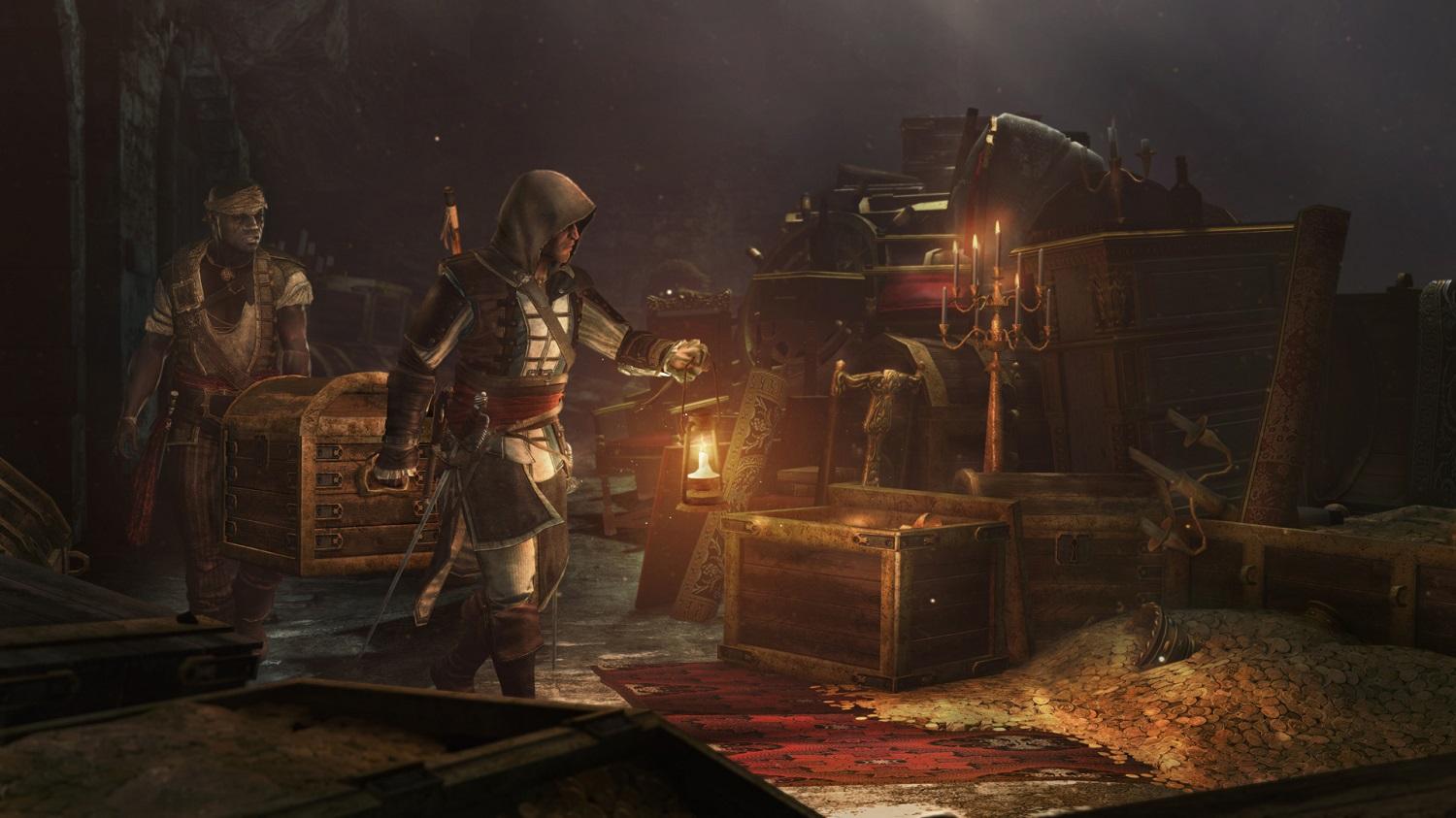
There are countless mini-games and side missions you can engage in –
from checkers to treasure hunting to tackling the odd courier you can
rob. But the game doesn’t really pick up until you have all the tools
you need to engage in piracy; that doesn’t come until you are several
hours in, anywhere from 8 to 20 hours depending on how you play.
Constantly finding new things like “Legendary Vessels,” incredibly
powerful ships with massive treasure stores hidden in the fog, keeps the
game enjoyably unpredictable, but to fight one of those ships you will
either need to dedicate yourself fully to upgrading at the cost of
everything else, or wait a long, long time.
The mechanics are much the same as they were when they were introduce in AC3
as a mini-game. You have multiple speed options, and an assortment of
weapons at your disposal – including front and side cannons and fire
barrels you drop behind you like mines. It’s a fairly simple setup, but
everything is upgradeable, from how armored your hull is to more
powerful cannons to aesthetics like the color of your sails. The more
powerful you become and the better the prizes you can take and the
battles are – again though, expect a lengthy wait.
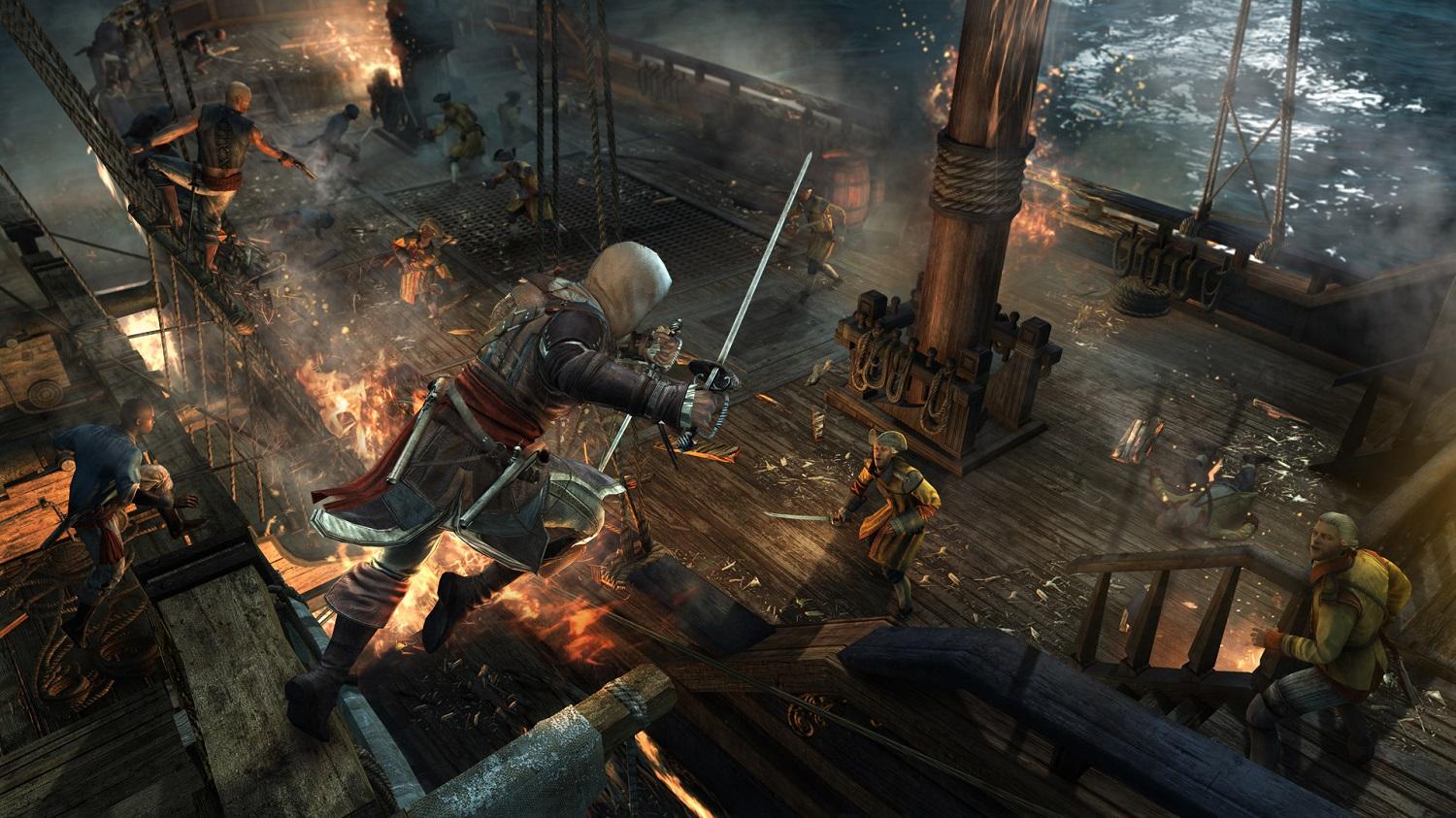
Once you lock in on a target, you wear them down with weapons fire
and brace for counterattacks. When they catch fire, you can sink them
and take half their supplies, or move in to board them. This starts its
own mini-game where you need to kill a specific number of enemies (and
occasionally complete secondary objective like killing scouts or taking
the enemy flag).
At first all you can do with a captured ship is to use it to repair
your own or lower your wanted level and shake off the hunters you will
inevitably call down on you. You can later send the ship to “Kenway’s
Fleet,” an online mini-game where you are presented with a reward/risk
mission for your fleet to run. It is similar to the brotherhood in
previous games, as well as the trade in AC3. Once you start the missions the results are automatic.
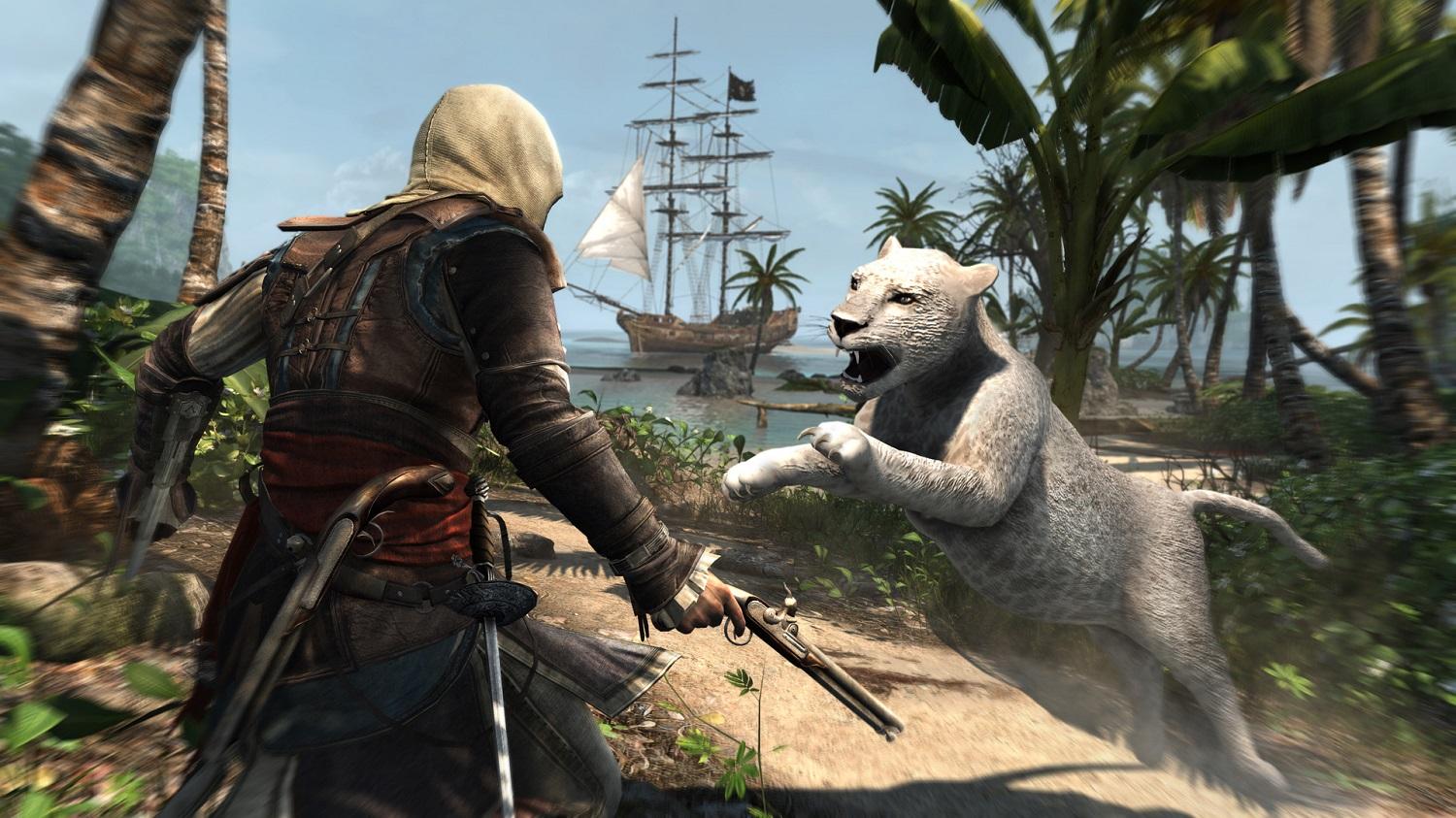
Black Flag also introduces a new crafting system similar to Ubisoft Montreal’s previous game, Far Cry 3.
Throughout the world are animals you can hunt, which you can then use
to craft new items like larger ammo pouches and better armor.
And on and on
If this all sounds familiar, it should. The naval focus is a fresh
new twist, and new tools – like a diving bell for retrieving sunken
treasure and a harpoon for hunting – become addictive. Like everything
else in the game though, repetition becomes a problem, and the lack of
payoff makes you wonder why you bother. Diving is a neat twist, but
there is very little variety to the missions. Exploration is a big part,
but after spending hours discovering islands where you find a chest
with only a few dollars, it takes some of the thrill away.

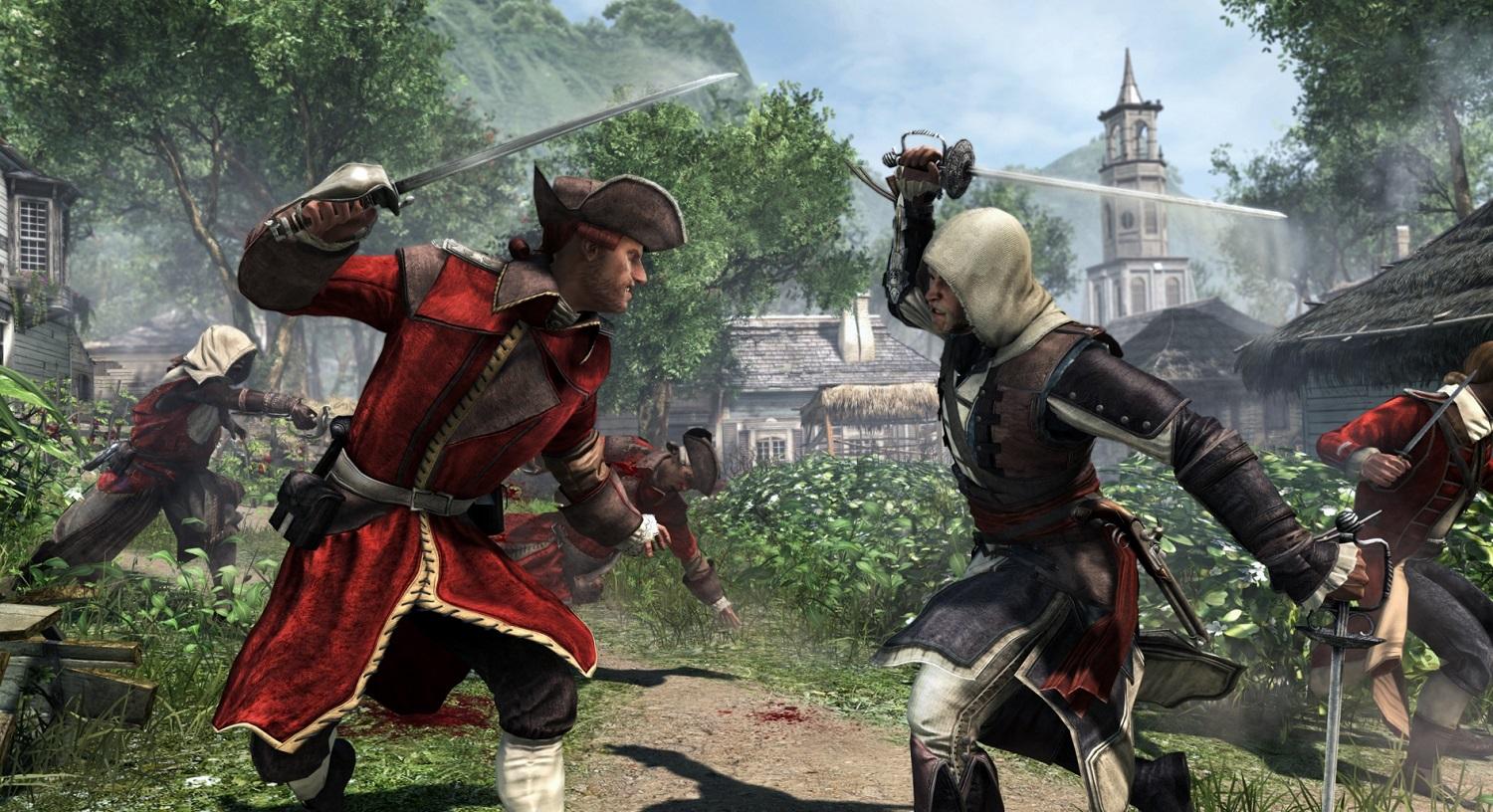
Take Assassination Contracts. In AC3 there were only a handful, but they were frequently varied and made you approach them differently. In Black Flag
you can almost always find your target, run straight at them and stab
them, then run away. It is not deep, and part of that is due to the AI,
which is unchanged since the first Assassin’s Creed. If Edward were a
real person and there was a biography on him, it could be named Whistle and Stab,
since you can beat most missions by hiding in a bush and whistling
until the guard wonders over, then stab them. Some AI will often watch
their companions disappear and continue talking to them as if nothing
happened. It kills any tension.
The formula has become stale, but the story missions remain a
highlight. These occasionally fall into familiar patterns as well, but
there are a few that still manage to show that the series has a lot to
offer. Sending fire ships into a blockade and taking out guards silently
to avoid them killing a hostage keeps things fresh. Eavesdropping and
tailing guards a dozen times, however does not.
The multiplayer mode returns as well, and for many it will be a
highlight of the game. It retains the same core focus on stealth and
evasion, and returns to the cat-and-mouse battles as well as the
cooperative Wolfpack mode. It is one of the most unique multiplayer
styles available today, and remains so in Black Flag. The real
highlight though is the Gamelab, a new feature that allows players to
create and upload their own match types, down to the smallest detail.
Along with the standard game mode options, you can change things like
map size and how long it takes to aim weapons. You can ban certain
abilities and preload others; change the cooldown to make it a constant
ability; set bonuses to score a particular thing more than another. It
is essentially the same tool devs use to create new games, just
streamlined to make it more user friendly.
 There is also a welcome tutorial section that is expanded from
previous versions, which should be welcome news for players new to the
series. The focus of the game remains on the single-player campaign, but
the multiplayer retains what made it work before, and the Gamelab is
brimming with potential.
There is also a welcome tutorial section that is expanded from
previous versions, which should be welcome news for players new to the
series. The focus of the game remains on the single-player campaign, but
the multiplayer retains what made it work before, and the Gamelab is
brimming with potential.
Conclusion
Assassin’s Creed IV: Black Flag
offers a new take on the genre of piracy, with an original character
whose story is refreshingly complex. Ubisoft Montreal managed to squeeze
a staggering amount of content into this game. Even if there is little
you haven’t seen before, the formula still has some life in it. The
series definitely needs some new tricks, but Black Flag has enough to keep it going for another year at least.
For some tips on getting started, checkout out our Black Flag guide.
Highs
- Massive open world
- Fresh naval combat
- Story, protagonist, and setting are all intriguing
Low
- Repetitive tasks
- Formulaic gameplay from previous titles
- It takes hours for the game to really pick up
(This game was reviewed on the PS3 using a copy provided by the publisher)


No comments:
Post a Comment